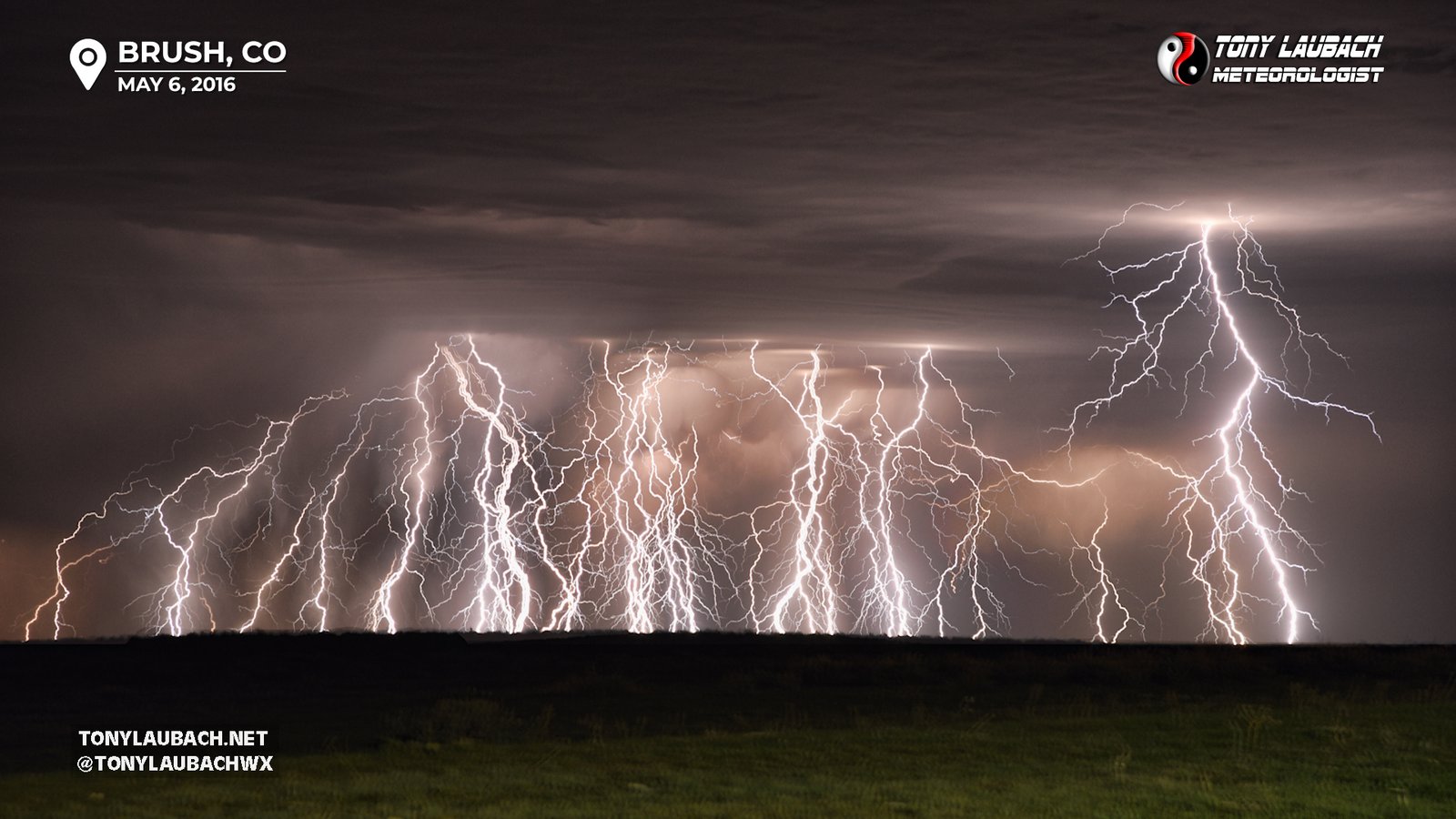
Shooting lightning, as I’ve mentioned only about a bajillion times in the past, is my favorite aspect of storm chasing. For me, this was REALLY where I got my start as my first couple summers in Colorado gave me many opportunities to capture lightning as I was still in the infancy of my severe weather career. Back in the late 90s and early 2000s, all my shooting was done on film cameras, namely a Canon AE-1. I don’t know exactly when digital SLRs came into the public grasp, but it would be many years before I would get my hands on my first DSLR.
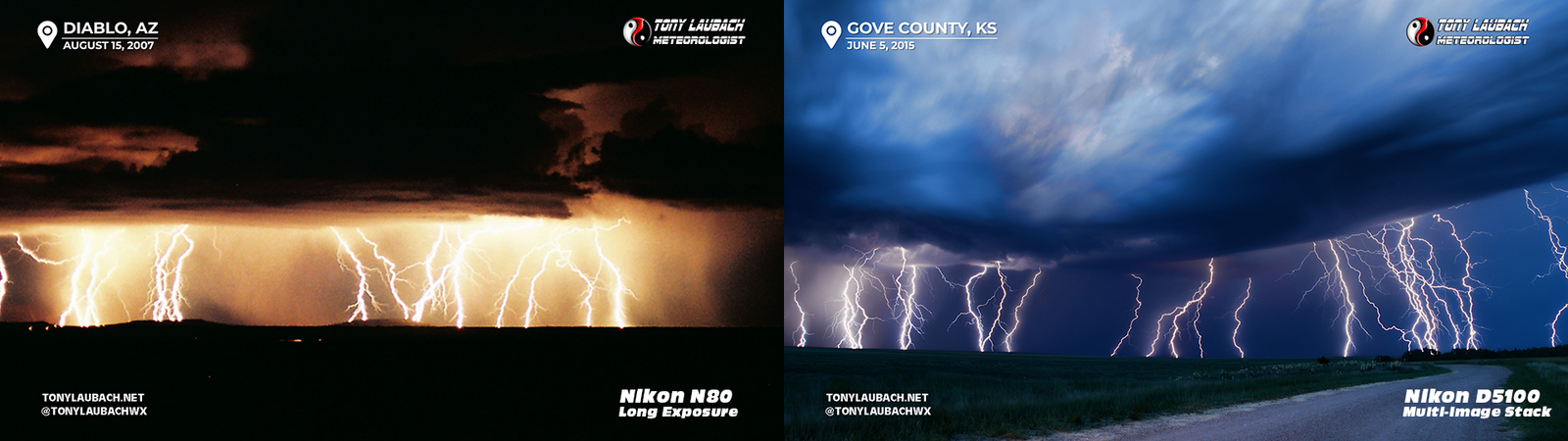
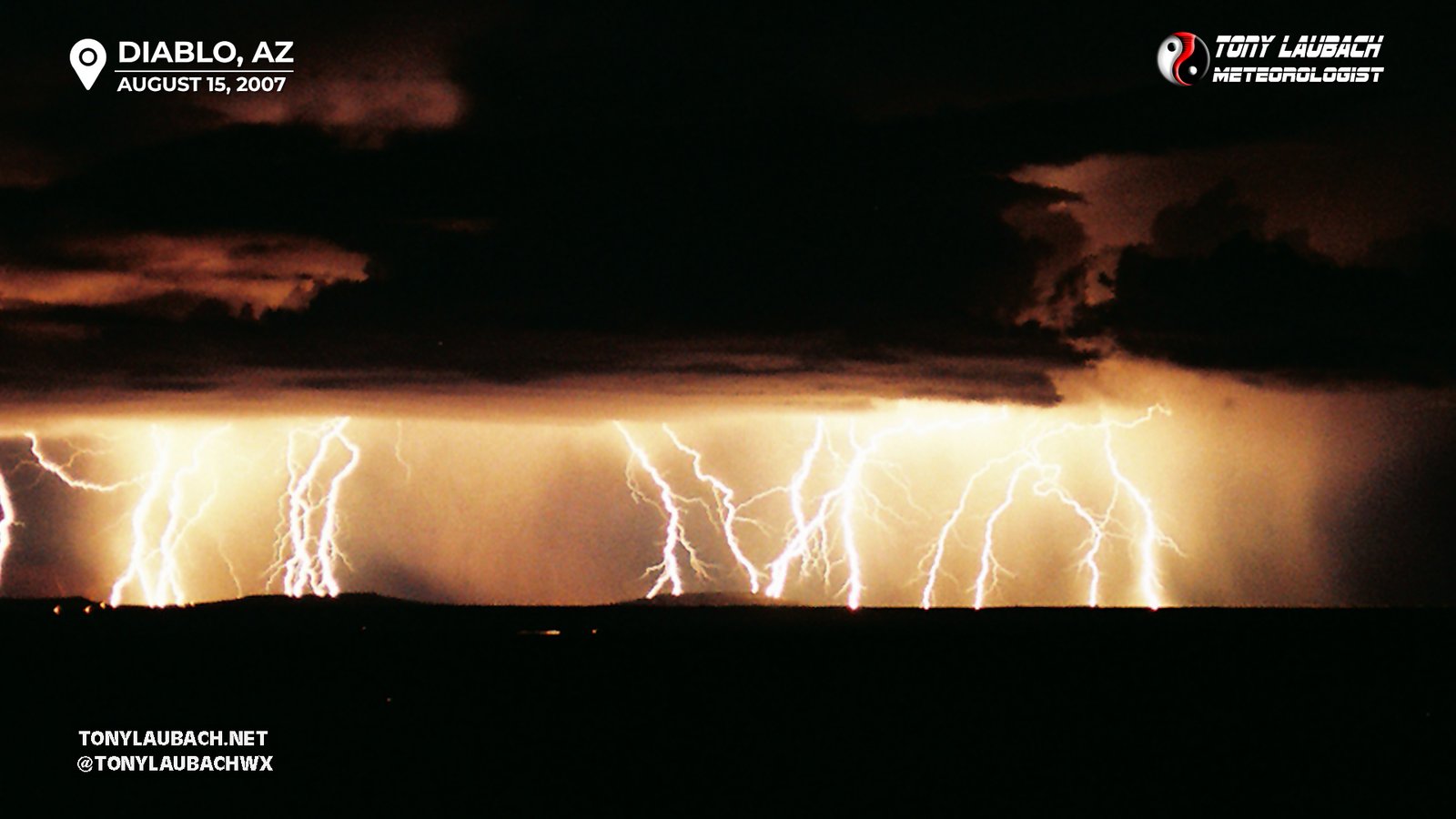
Of the many lessons and tricks I learned in those early years, one was a key aspect of film lightning photography; long-exposures. With a good camera and film, you could essentially leave the shutter open for many minutes, easily 10 minutes or more. While I didn’t experiment too much with this in my AE-1 years, my first monsoon trip to Arizona in 2007 offered me a legit chance to do this as I purchased a ‘modern’, albeit lower end Nikon N80 film camera to take with me on that trip so I could do just that along side my single-exposure Nikon D40X digital (my first camera body in the DSLR era). Back then, I didn’t know how to ‘stack’ images, nor did I really understand the concept. It was a more advanced photo editing technique that I was not terribly familiar with, although I knew it existed. Because digital cameras, particularly early on, didn’t do super-long exposures well, this was a growing technique used by photographers to achieve similar results as long exposures on film cameras. One of the digital issues was noise, the longer you left the shutter open, the more susceptible to noise on the images you were. And again, early photoshop days didn’t have the noise reduction post-processing abilities we see in modern versions of the software. Even the cameras, while many featured some noise-reduction, it didn’t allow for super long exposures.
When I made my monsoon trip in 2007, I wanted long-exposure shots, many bolts on one image. So a few weeks prior to that trip, I bought a used Nikon N80 film camera and a 28-80mm lens on Ebay with the sole purpose being to take long-exposure film shots along side my digital shots. The investment was mostly worth while; the idea proved to be true in concept, although the images were slightly out-of-focus and ultimately not the crisp shots I had intended. But the idea was there, and it was solid, but it would be a few years later when I would finally grasp the concept of stacking images, using short exposures with the same settings and zoom to achieve the same visual look in post.
In 2015, with a newer Nikon D5100, I had finally acquired the software and the skills to achieve this visual style I wanted so much. The process if relatively simple; set up your shots and zoom with the settings you want, get the camera pointed where you want, and go to town, taking short exposures all in a row, for as long as the conditions warrant. When you’re done, import all those photos and start selecting the shots, layer them in Photoshop, and begin the process. Once all the images were stacked in their respective layers, merge them together, do your touch-ups to the now single image, and you now had a crisp, clean image that essentially works like a single long exposure.
I have added this as a usual way to shoot lightning, particularly in recent years as I now have multiple camera bodies in my arsenal, with one usually being dedicated to shooting for stacks. Even as cameras have advanced, multi-minute exposures generally aren’t the most proficient way to go about this look due to noise, battery, etc. In the digital age, post-processing has become a significant part of the photography process. And this stirs a debate, whether this is true photography. For stacking, it does get some boos from the peanut galleries on social media. A recent comment on one of my photos said ; “Instead of a stack-up– if this was truly a 1-shot hit, “money”. But…” Obviously he wasn’t a fan; but clearly did not understand the process involved. But I get it, and while I respect your opinion, I don’t think it makes a shot any less money. In fact, I would argue that simply stacking the image (no other post-processing) verses a multi-minute exposure of the same shot would’ve looked better than the long-exposure on digital. Actually, it is something I could theoretically do, with or without lightning, taking a single-long exposure verses a series of short ones in the same time span. May be worth a test?
But the argument is valid… I can see where purists go against it. I, however, do not. In fact, I think completely opposite because I set up to shoot this way. Again, with multiple bodies at my disposal, I often dedicate one for stacking; setting it up on a wider zoom, and letting it go to town. I have done stacks that includes images separated by as much as 20 minutes, using exposures ranging from 5-to-30 seconds in length, depending on the ambient lighting. I go into the shoot with one goal in mind, creating multi-bolt images that show off a long amount of time, all the while shooting individual frames on other cameras to capture other scenes.
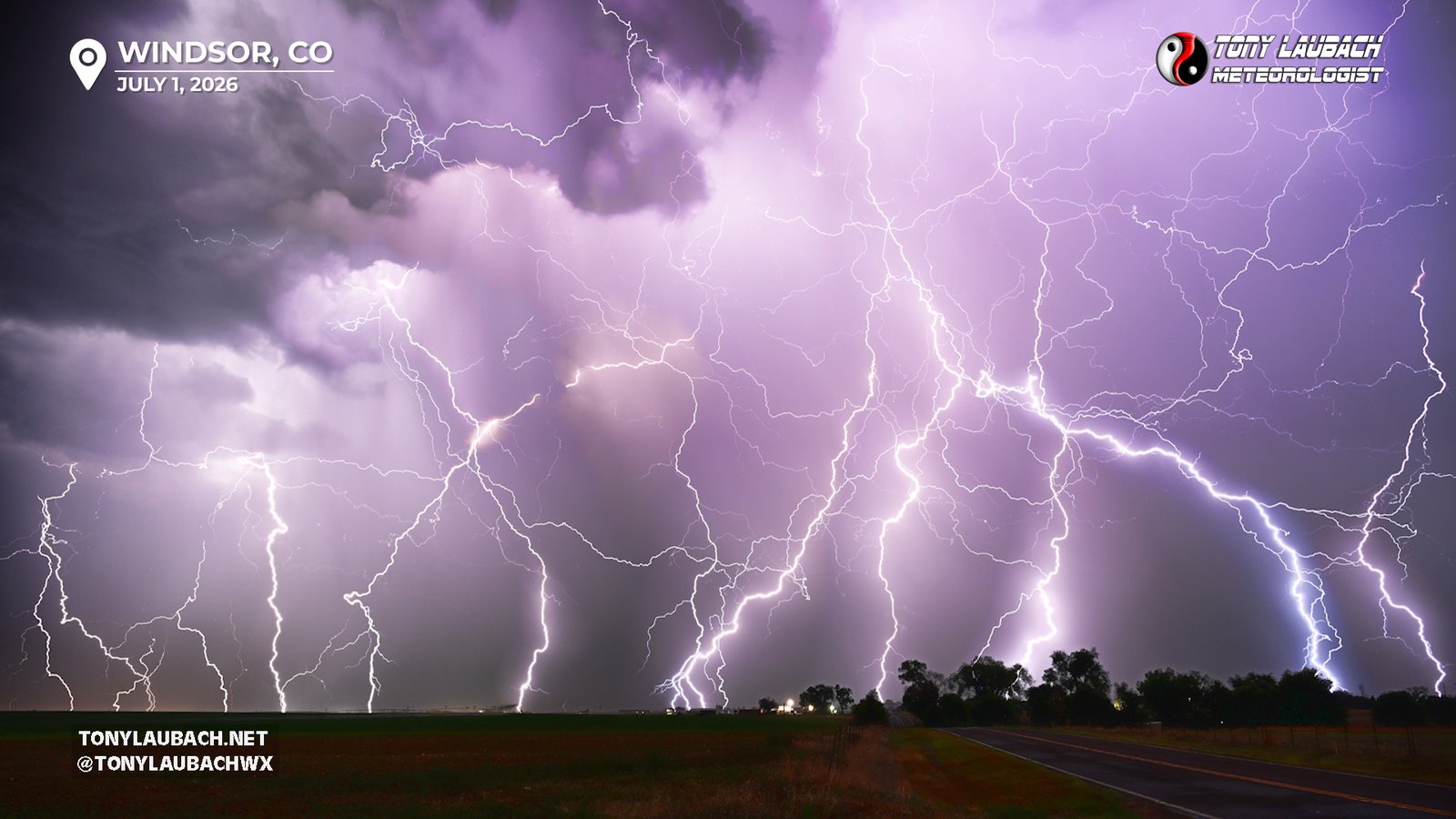
While there are caveats to this method of shooting, this offers several advantages. Obviously because the shots are separate, you have single images that can be great all on their own. Obviously you also get the ability to pick and choose your images to stack, meaning you can set up the composite however you wish with whatever shots suit your taste. This is where you get into that grey area, one I am not against in any way, because you can then skip certain images if they don’t work. In some cases, shots are blown out, which when stacked into a composite shot, can wash out bolts; removing said shot from the sequence cleans this up. You’re not adding any fake elements, just removing frames that don’t fit your shot. I don’t see this as a problem, in fact, I love that I can do this. I recall one image in my 2007 Arizona trip where I was exposed for the distant lightning, but a very close, very bright flash, hit and totally blew out the shot. Having a series of multiple exposures means that in the particular frame that occurred, I could simply omit it from the stack, saving the image composite. I also could remove frames that may over-crowd, blow out, or otherwise degrade the overall piece. Yes, it’s selective, but I think that’s part of the process. When you go fishing, you don’t keep EVERY single fish, some get thrown back for various reasons. For composite shooting, some frames get thrown back.
It’s a process that took a while to get into, but when I did, I immediately adapted it into my shooting, so much so that it lead me to purchasing a second camera body so I could dedicate one camera specifically for that. And I think nothing less of the process. I’m pretty open, overall, to digital editing, so long it isn’t abused or passed off as something else. Obviously fabricating shots, AI, those types of things, can degrade an image, and if that’s your style, by all means, but show it off as it is, not pretend it to be something else entirely. When I post composite shots, I say they are; technically to me, they are the digital equivalent to long-exposures that today’s digital cameras just cannot do like they were done in the film days. Just because it wasn’t captured that way in one frame in-camera doesn’t take anything away from it. That’s my opinion, and the end results speak for themselves. When done right, and done well, the shots look as good if not better than old-school long-exposures, and are done with more control.
My thoughts are simple; do whatever the hell you want. It’s your art. Just be honest about it; don’t pass it off as something it is not. Very simple.. my tastes may not match yours, and that’s fine. In the end, I shoot for me, and there are plenty of folks out there who enjoy very much what I do. But none of them more than me; so I will make my art in the way I want to, and I am happy with what comes out of the processes I go through 🙂